Late summer across the American South is a season of shimmering heat, warm evenings, and, if you time it right, a fresh wave of zinnias bursting into color. While many gardeners assume spring is the only window for sowing annual flowers, Southern growers have a secret advantage: our long, lingering warm season creates a perfect second planting opportunity
If your garden beds look tired by August, zinnias are the easiest way to revive them with bold, joyful color that lasts well into fall.
From California’s Inland Empire to Florida’s panhandle, late summer heat accelerates zinnia growth. Here’s why this timing works across diverse Southern climates:
Heat lovers: Zinnias thrive in 90–100°F, conditions common from August through September.
Fast bloomers: Most varieties flower in 45–60 days, giving you color by early fall.
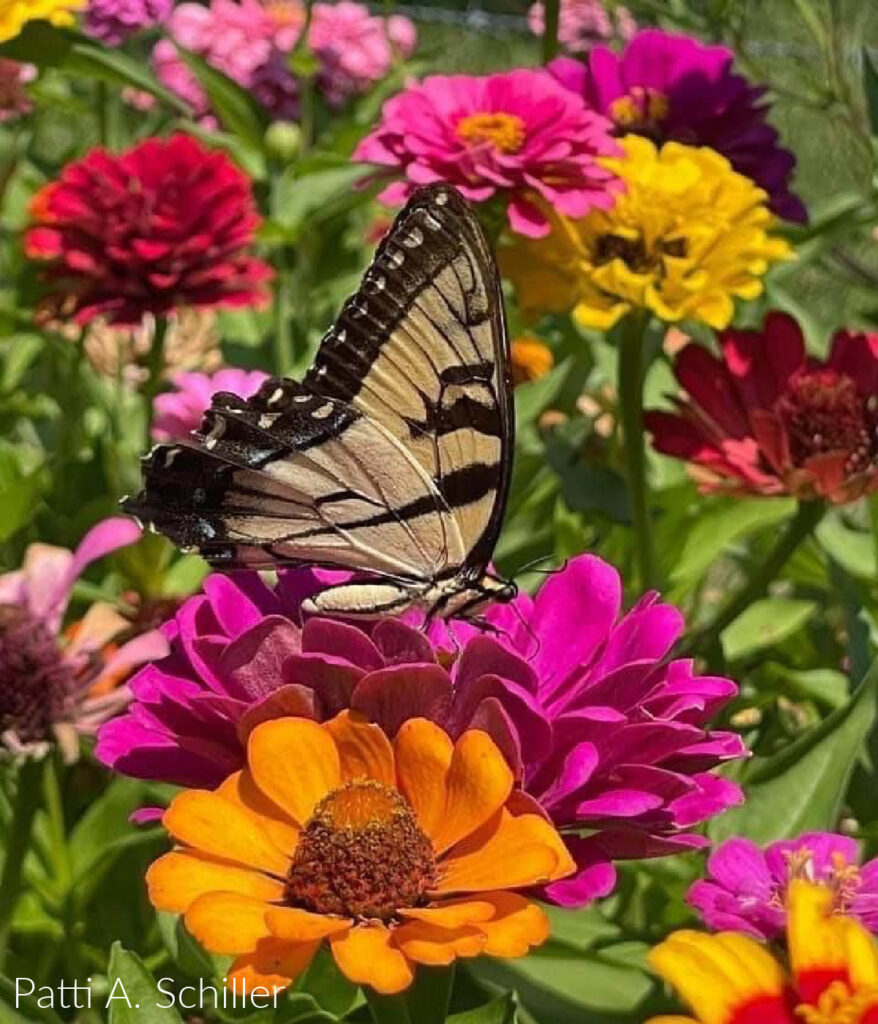
Pollinator magnets: Monarchs, Queens, swallowtails, and native bees rely on late‑season blooms.
Perfect for succession planting: They fill gaps left by spring annuals that have faded in the heat.
You are sure to attract many butterflies to your garden with colorful zinnias.Click here for seeds.
How to Plant Zinnias
Direct sow into a prepared flower bed or container. Press seeds down and slightly cover with soil.
Plant where they will get 6–8 hours of full sun.
Keep soil moist until seeds germinate. Then continue watering as needed.
Water at the base only to avoid wet leaves to reduce powdery mildew.
Sow every 2–3 weeks for continuous blooms.
Stop planting about 8 weeks before your first frost.
Harvest often which encourages more flowers.
Zinnias grow from seed to bloom in 50 to 60 days. Seeds planted in August will flower by late September or October. This late planting turns your garden into a helpful resting spot for migrating monarch butterflies.
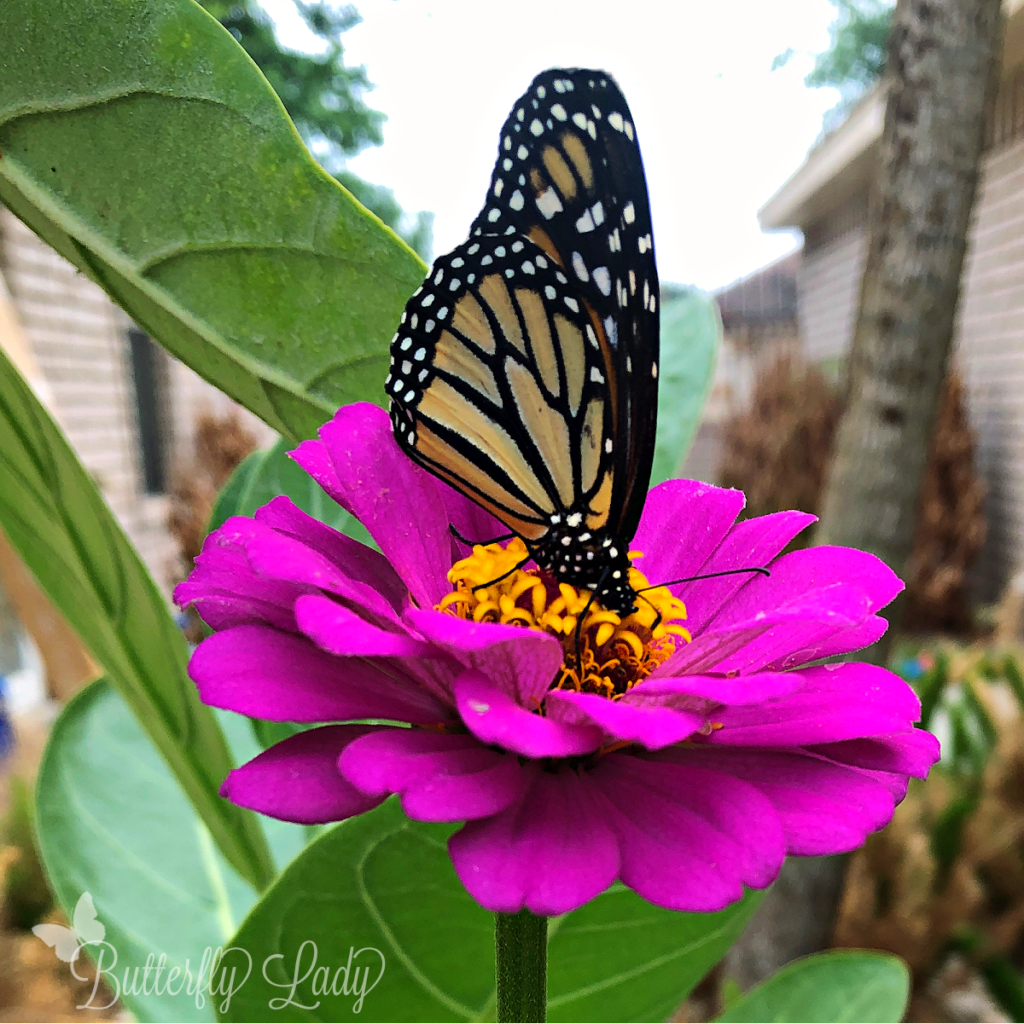
Monarchs love zinnias! Click here to purchase seeds.
Milkweed seeds are small time‑travelers. Each one carries a built‑in memory of winter, a biological expectation that cold, moisture, and patience will signal when it’s safe to emerge. For gardeners, educators, and habitat‑builders, understanding this process is the key to turning a handful of seeds into a thriving patch of monarch‑supporting plants.
Cold stratification sounds technical, but it’s simply the act of mimicking winter. I used to be intimidated whenever I saw the term “cold stratification” on seed packets. Since then, I have learned it is a simple technique, and there’s more than one way to do it. Whether you garden in a snowy climate, a warm region like South Florida or Texas, or somewhere in between, you can choose the method that fits your space, your schedule, and your style.
What Cold Stratification Actually Does
Cold stratification, also known as seed stratification, is the process of exposing seeds to cold and moist conditions to encourage germination. In nature, the stratification process takes place when fallen seeds overwinter underground or beneath a layer of snow. But you can accomplish the process yourself by replicating Mother Nature.
Four Reliable Ways to Cold‑Stratify Milkweed Seeds
1. Direct Outdoor Fall/Winter Sowing
The perfect time to sow native milkweed as well as other native perennials outdoors is right when Mother Nature does it, in the fall! Exposure to cold temperatures and moist conditions during winter will stimulate germination.
How to do it:
Prepare a weed‑free patch of soil.
Scatter seeds on the surface.
Press them in gently (milkweed needs light to germinate).
Let winter weather do the rest.
2. Winter Sowing in Containers
This method is a favorite for many gardeners and perfect for beginners. Winter sowing uses vented containers (milk jugs, takeout boxes, rotisserie chicken domes, Ziplock bags) as mini‑greenhouses. You sow the seeds, set the containers outside, and let nature handle the cold, moisture, and temperature swings.
How to do it
Choose a translucent container (milk jugs, clamshells, etc.). If using a milk jug, discard the cap.
Add drainage holes on the bottom of the container using a drill or hot glue gun. Add ventilation holes on the top of the lid if using plastic container.
A controlled indoor method that works in any climate. This technique mimics winter inside your refrigerator.
How to do it
Moisten a paper towel, sand, perlite, or vermiculite until damp but not dripping.
Mix in the seeds or fold them inside the towel.
Seal in a labeled bag or container.
Refrigerate for 30–60 days.
Plant once the stratification period is complete.
Why it’s useful
Predictable and consistent
Ideal for warm‑climate gardeners
Great for small seed batches or precise timing
4. Cold‑Moist Stratification in Pots, Also Known as “Seed Sitting”
I recently discover a very easy way to grow native milkweed and wildflower seeds called Seed Sitters which was created by the David Suzuki Foundation. Seed Sitters is an inexpensive and simple way to grow native milkweeds and other native plants through winter sowing on a balcony on in a backyard.
How to do it
Fill pots with potting mix.
Sow seeds on the surface and press lightly.
Leave pots outdoors all winter in a protected spot.
Cold stratification is more than a gardening technique, it’s a way of participating in the seasonal rhythms that monarchs depend on.Each seed you prepare is a promise of nectar, shelter, and migration support. Whether you’re winter sowing on a patio, stratifying seeds in your fridge, or scattering them across a wild patch of land, you’re helping rebuild the living corridors that butterflies, bees, and countless other species rely on.
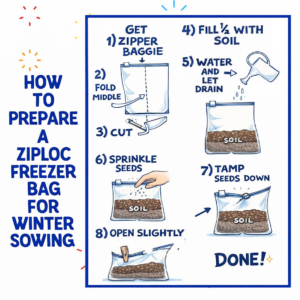
Winter sowing in zip‑lock bags is simple, low‑cost, and surprisingly effective way to winter sow native milkweed and perennial seeds. It is also a low mess alternative to milk jugs. Ziplock bags act like mini cold frames, letting moisture, light, and fluctuating winter temperatures stratify seeds naturally. They’re lighter and easier to store than jugs, and they warm quickly on sunny days.
Here’s a clear, gardener‑friendly walkthrough to help you get started.
Cover lightly only if the species requires it (many natives need light to germinate).
Seal for Ventilation
Zip the bag almost closed, leaving a ½‑inch gap for airflow.
This prevents mold while still holding humidity.
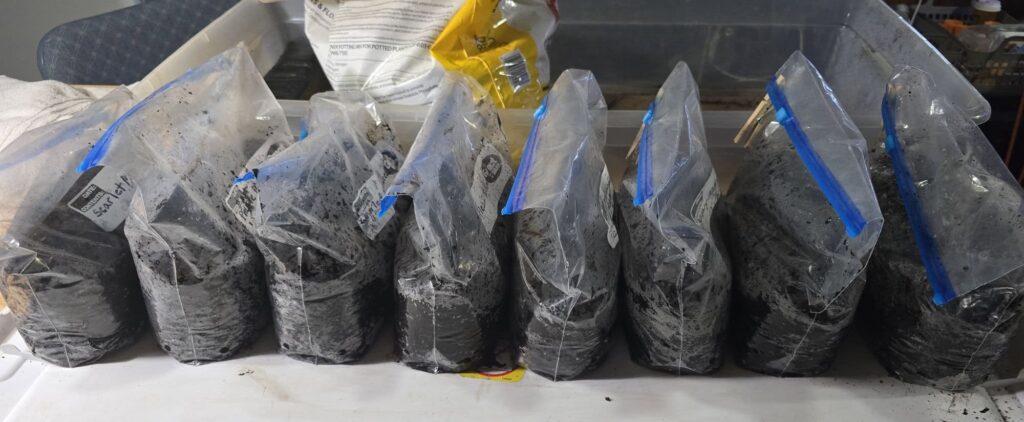
“I started winter sowing today with 8 types of milkweed . This was just before we hung the bags outside. I have many other bags to prep and hang outside. This was such a successful method for me last year! ” Jennifer Zolinski Gezequel
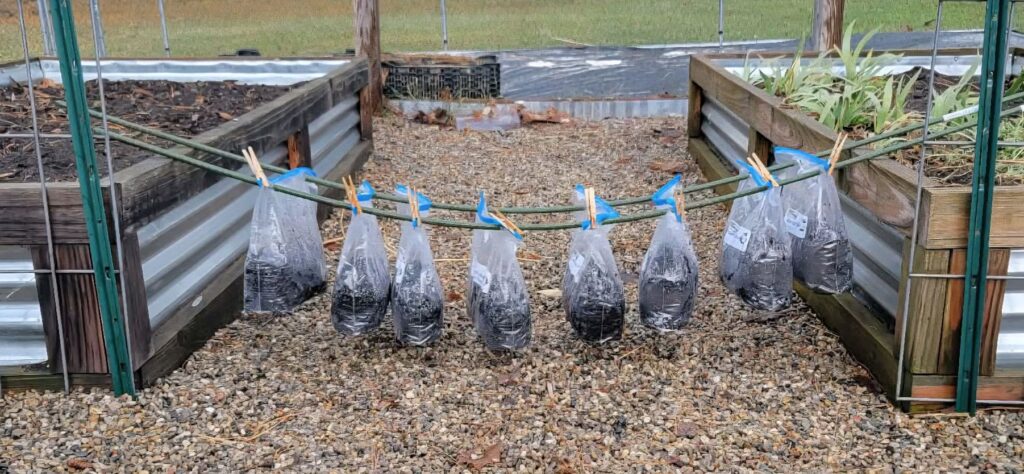
Place Outdoors
Set bags in a bright, open area that gets rain.
Jennifer Zolinski Gezequel hangs ziplock bags using stakes laying across raised beds.
Let Nature Work
The freeze and thaw cycles stratify the seeds.
Condensation inside the bag is normal and acts like a tiny greenhouse.
Monitor in Early Spring
When seedlings appear, gradually open the bag wider over a week to acclimate them.
Once they’re sturdy, transplant into pots or directly into the garden after the last frost in your area.
Male butterflies frequently seek out plants that are rich in alkaloids, not simply for nourishment but for pharmacology—the deliberate ingestion of plant chemicals necessary for producing sex pheromones. These pheromones, which are derived from the alkaloids consumed, are stored in specialized scent organs and later released during mating rituals to attract female butterflies.
Male Queen butterfly sipping nectar from Gregg’s miistflower to get nourishment and to absorb alkaloids needed for mating.
Chemical Attraction and Courtship in Queen Butterflies
A notable example of this behavior is seen in the Queen butterfly (Danaus gilippus). Male Queen butterflies are particularly attracted to Gregg’s mistflower(Conoclinium greggii) due to a unique chemical interaction that significantly influences their mating behavior. Gregg’s mistflower produces a high concentration of alkaloids, especially pyrrolizidine alkaloids, which the male butterflies actively seek.
MaleDanaus gilippusbutterflies—commonly known as Queen butterflies—are especially drawn to Gregg’s mistflower (Conoclinium greggii) due to a fascinating chemical interaction that plays a role in their mating behavior.
After consuming these compounds, the males convert them into sex pheromones that are stored in specialized scent patches on their wings, known as androconial organs. During courtship, the males release these pheromones to signal their fitness and appeal to potential mates.
Mating occurs mostly midafternoon. A male seeks out a female near milkweed plants. He will hover over her releasing a sex pheromone that makes her receptive to mating.
Why Gregg’s Mistflower Is a Preferred Choice
Gregg’s mistflower stands out among native plants because of its particularly high alkaloid content. This makes it a key resource for male butterflies seeking the chemicals necessary for pheromone production. In addition to its chemical properties, Gregg’s mistflower boasts a long blooming season and dense clusters of lavender-blue flowers, providing an abundant nectar source. This combination of chemical and nutritional benefits makes the plant exceptionally attractive to male butterflies, serving both their reproductive and dietary needs.
Among native plants, Gregg’s mistflower is especially rich in these alkaloids, making it a hotspot for male butterflies. Click here to purchase Gregg’s Mistflower seeds.
Monarch RX
A new citizen-science project, Monarch Rx, explores this little-known behavior in monarch butterflies called PA-pharmacology, where they scratch at and sip from leaves of non-milkweed plants containing pyrrolizidine alkaloids (PAs). These compounds, found in plants like boneset and mistflowers, provide defense against predators and potentially aid in mating and disease resistance.
The project invites the public to report observations of this behavior to gather data on plant diversity and frequency of PA-gathering. Collaborators hope this initiative will shed light on an overlooked aspect of monarch butterfly behavior and inspire further research into their association with PA plants.
Check out the Monarch Rx project on CitSci.org, where you’ll find links to the paper, a one-page primer about the topic, and a place to put on record the many observations we hope you’ll make.
Have you ever wondered a migrating monarch can fly up to 2,500 or sometimes even 3,000 total miles from Canada and Northern United States and find the exact location they need to find in Mexico to overwinter? None of the monarchs on the fall migration path have ever been to their destination before, and yet they know exactly where to go.
Monarch butterflies know to migrate south because their genes give them an internal “clock” and instructions for navigation. They use a complex system involving a time-compensated sun compass, a circannual clock, and possibly Earth’s magnetic field to fly south. Specialized cells in their antennae and eyes help process these cues, enabling them to fly in the correct direction even on cloudy days to reach overwintering grounds in Mexico, a place they’ve never been before.
Monarch butterfly antennae are far more than delicate feelers—they’re precision instruments for navigation. During their epic migration, these antennae play a crucial role in helping monarchs orient themselves and stay on course.
Internal Clock in the Antennae
Monarchs use a circadian clock located in their antennae to track time of day. This clock syncs with the position of the sun, allowing them to use a “sun compass” in their brain to determine direction. Without this timekeeping mechanism, they’d misinterpret the sun’s position and veer off course.
The brain integrates signals from the antennae’s clock with visual cues from the sun. This coordination helps monarchs maintain a southward trajectory toward their overwintering sites in Mexico.
So in essence, monarch antennae are like nature’s GPS satellites, keeping time, syncing with celestial cues, and guiding these tiny travelers thousands of miles with astonishing precision.




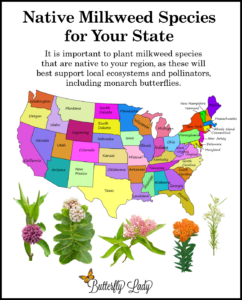

 Click here to Find Native milkweed seeds for your area.


 ”
” 

 Male Danaus gilippus butterflies—commonly known as Queen butterflies—are especially drawn to Gregg’s mistflower (Conoclinium greggii) due to a fascinating chemical interaction that plays a role in their mating behavior.


